
The Federal Government is composed of three distinct branches: Legislative, Executive, and Judicial. Their respective powers are vested by the U.S. Constitution in the Congress, the President, and the Federal courts. Powers not explicitly granted to the Federal Government are reserved for the States and the people, and are subsequently divided between State and local governments.
We would like to introduce a proposed Fourth Branch: The Office of Investigations and Corrections (OIC). The core purpose of this Office is to optimize the U.S. Government by auditing systemic operations, maximizing time and resource management, eliminating bureaucratic friction, and ensuring that all institutional workflows operate smoothly, transparently, and efficiently.

Where do we find any clean statement of the purpose(s) of the United States government?
What is the goal, or goals, of the United States government?
It is very interesting to me that the Supreme Court, and others in the legal field, take the view that the Declaration of Independence has no standing as a “legal document” of the United States. It is not, apparently, used by any part of the government in conducting any business. It is not considered when handing down court decisions. It is not used by the President in deciding which way we should go, etc.
And yet it’s one of the main things that helped get this whole place started. It’s one of the few places where we get a little writing on something akin to purpose. It was mostly written by one man, Thomas Jefferson.
Here are some excerpts:
“We hold these truths to be self-evident, that all men are created equal, that they are endowed by their Creator with certain unalienable Rights, that among these are Life, Liberty, and the pursuit of Happiness. That to secure these rights, Governments are instituted among Men, deriving their just powers from the consent of the governed. That whenever any Form of Government becomes destructive of these ends, it is the Right of the People to alter or to abolish it, and to institute new Government, laying its foundation on such principles and organizing its powers in such form, as to them shall seem most likely to effect their Safety and Happiness. Prudence, indeed, will dictate that Governments long established should not be changed for light and transient causes; and accordingly, all experience hath shown that mankind are more disposed to suffer while evils are sufferable than to right themselves by abolishing the forms to which they are accustomed. But when a long train of abuses and usurpations, pursuing invariably the same Object, evinces a design to reduce them under absolute Despotism, it is their right, it is their duty, to throw off such Government, and to provide new Guards for their future security.”
“And for the support of this Declaration, with a firm reliance on the Protection of Divine Providence, we mutually pledge to each other our Lives, our Fortunes, and our sacred Honor.”
I conclude that Mr. Jefferson and the other brave men who signed that document were very dangerous fellows indeed. They did risk their lives—everything—by signing that document, and they helped throw off the yoke of the then most powerful country on the planet.
It’s interesting that the Supreme Court took this view of this remarkable document, especially in light of the fact that it refers to “Nature’s God,” “their Creator,” “the Supreme Judge,” and “a firm reliance on the Protection of Divine Providence.” If the Court acknowledged that this document had any standing at all, other than as something for kids to talk about in school, well, they might have to come up with a different solution to that pesky problem of kids learning about religion in schools.
Another piece of writing that doesn’t get much attention is the Preamble to our Constitution:
“We the People of the United States, in Order to form a more perfect Union, establish Justice, insure domestic Tranquility, provide for the common defence, promote the general Welfare, and secure the Blessings of Liberty to ourselves and our Posterity, do ordain and establish this Constitution for the United States of America.”
Gouverneur Morris is widely credited with having written that, and with composing most of the language used in the rest of the Constitution.
Both gentlemen mention the word Liberty.
My American Heritage College Dictionary, Third Edition has these definitions for liberty, among others:
“1.a. The condition of being free from restriction or control. b. The right and power to act, believe, or express oneself in a manner of one’s own choosing. c. The condition of being physically and legally free from confinement, servitude, or forced labor. 2. Freedom from unjust or undue governmental control. 3. A right and power to engage in certain actions without control or interference.”
Now, which of those two documents should be senior?
I would like to put it forth that they are both pretty darn important, but I give the nod to the Declaration of Independence for a few reasons:
That phrase, “Life, Liberty, and the Pursuit of Happiness,” is sure a grand phrase. It covers a lot of ground. It captures the imagination and lets the imagination soar to unlimited heights, which I think is appropriate for something that is touching upon the idea of purpose. It’s hard to pin down exactly what was meant by that, so each of us can contribute our own idea of what it means to us.
The Preamble to the Constitution has a pretty good phrase itself and ends in something with some grandeur to it: “[in Order to] secure the Blessings of Liberty to ourselves and our Posterity, do ordain and establish this Constitution for the United States of America.” It’s pretty good, but I just like Mr. Jefferson’s effort better.
Also, Mr. Jefferson makes it very explicit that:
The truths mentioned are self-evident. They do not need to be proved.
We have unalienable Rights that cannot be taken away from us.
We have more rights than only Life, Liberty, and the Pursuit of Happiness.
Governments are instituted with the purpose of securing these rights for the People.
Governments derive their powers from the consent of the people being governed.
When any government becomes destructive of the rights of the people, it is the Right of the People to alter or to abolish it.
When a long train of abuses aimed at reducing the people under absolute Despotism becomes apparent, it is their right—their duty—to throw off such Government and provide new Guards for their future security.
Pretty powerful stuff, and not covered in the Constitution, as far as I can see. I can see why a conservative group, such as I consider the Supreme Court to be, might not want to recognize such a document.
All right. I hereby put forth for your consideration additional statements, or descriptions, of the proper purposes of the U.S. Government:
To take such actions as will promote the maximum freedom, power of choice, and opportunity for each individual in that pursuit of happiness.
To refrain from taking actions that tend to reduce the individual’s power, scope, and ability.
To promote individual responsibility.
To be prudent in budgets and spending, not wasteful of the citizens’ hard-earned coins.
To promote a level playing field in the economic arena.
To promote fast, fair, and affordable justice for the high and the low.
To strive to be a good neighbor with the countries of the world—not seeking to dominate them by force or the threat of force—but striving to produce more than is consumed and demonstrate, by example, the many advantages of liberty to the world.
To strive for honesty in its dealings with the People and with the nations of the world.
Now, what do you think are proper purposes of the U.S. Government? I have some ideas for proper goals of the U.S. Government, but more on that later. What do you think would be good goals for the U.S. Government?
As you read about the various situations and parts of government that follow, imagine what the people involved in those areas think about the purposes of the federal government.
What are they trying to achieve for themselves, for the government, and for the country as a whole?

In some places these guys are considered to be sacred. They can do pretty much what they want. I don’t think we should treat them like that here.
I have come to the conclusion that our national government has gotten itself infested with an unknown but large number of people who do not have the best interests of the people, the country or the planet as a whole at heart. Instead they are some combination of: totally unproductive, or wasteful in the extreme, or corrupt, or criminal, which includes those who have no concept of right or wrong and those who appear to be pursuing goals harmful to the country and to the individual citizen.
Unfortunately, it seems likely that more than a few such people have inserted themselves into positions of power. Worse, they have assisted others of their kind into supporting positions of power, so that it seems very hard to root them out.
I believe, or, I want to believe, that the majority of people who work in the US government mean well and are trying to do the right thing for the country and for its citizens.
But if you work in the government in a crazy department, surrounded by crazy policies and regulations that hamper you from doing an effective, responsible job, or your boss or his boss is serving some vested interest or simply creating his own little kingdom, you might find it difficult to do your job the way you know it should be done.
Some of these people may seem to have a lot of power, but they have no power of their own. They take power of the government, or some portion of it, which ultimately comes from us, the workers, the artists, the small business owners, the guys and gals who are trying to raise families and build communities, trying to create a future of freedom and dignity, and turns that power against us in some misguided effort to keep us squashed down and too burdened with artificially-created troubles to cause any trouble to the folks in power, “the government.”
It’s a simple book; one that I hope doesn’t take you too long to read. You’ve read enough already to form some idea of whether you might agree with this conclusion. If not, skip it. Do something that seems more interesting to you. But if you think there might be something to this, read on. I will briefly discuss some events, and portions of the US government, that I think illustrate the likelihood of what I described in paragraphs one and two above being true.
Chapter Two outlines a proposed solution for this dilemma facing all of us: how can we keep our government honest, efficient, and productive? Can anything be done about it? I take the position that the answer to that question is yes.
This next point is a delicate point: Everyone over the past couple hundred years who stood by and let things build up to this has to acknowledge that they had a hand in things getting this bad. I have to say I would be near the top of that list. I haven’t wanted anything to do with helping or improving our government for quite a few years now.
We don’t have to beat ourselves up for that, but it is my hope that enough of us will begin to take a little responsibility for how things are going and do something effective.
Following are examples of areas where something’s not right: (We just don’t know all the details yet.)
Below is the first part of the proposed Amendment.
Primary Investigative Powers and Corrective Powers herein granted shall be vested in an Office of Investigations and Corrections (OIC), which shall consist of 25 Investigators.
All right. Why all these different provisions? Why all the details?
Well, I’m trying to solve various problems with these points.
It’s very slightly modeled after a Grand Jury-type group, except this one doesn’t wait for a local prosecutor to tell them what they can or can’t investigate or who they can or can’t indict.
Twenty-five members comprise the group so that, when they vote on something, it’s not just one or three or five people saying something is wrong or someone needs to be fired, indicted, impeached, or whatever.
There are lots of details so someone can’t later, in 100 years or so, come in and change the definitions and meanings of things, and thereby subvert the original intent.
Investigators shall serve a single, limited term of 10 years. An Investigator may serve only one term and shall not thereafter be eligible for U.S., state, or local government employment after serving as an Investigator, except in an elective office.
Investigators may not serve in any other capacity at any level of government while serving as an Investigator.
After serving in office, an Investigator may not be employed by any entity that receives money from the U.S. government or from any state or local government.
Limited terms of 10 years are proposed for several reasons.
I don’t want these individuals worrying about getting re-elected. They should work in the best interests of the individual voters—the ordinary citizens—without being influenced by short-term political trends or shifting public opinion.
I believe our current system requires Senators and Representatives to devote too much attention to remaining popular while simultaneously raising enough money from major donors. Right away, you have conflicts of interest that are difficult to reconcile: obtaining campaign funding while also earning enough votes to remain in office. On one hand, candidates court organizations and individuals with substantial financial resources; on the other, they seek support from the voting public. I believe those interests are often very different.
Two or four years really isn’t enough time to accomplish meaningful reform, in my opinion, particularly when addressing something as large and complex as the U.S. government. At the same time, I didn’t want the position to become a lifetime appointment because I believe it’s healthier to have fresh perspectives entering the Office over time.
After honorably completing their term, Investigators may not work for any government unless elected by the people. Likewise, they may not work for any organization receiving government funding. This is intended to prevent situations where an Investigator might be tempted to overlook problems within government in anticipation of receiving a lucrative government position or private-sector job funded by government contracts after leaving office.
Investigators shall be elected by majority vote of the registered voters of the five least densely populated states. No more than three Investigators may have resided in any one of those states for more than five years prior to their election to the OIC.
Why should only the voters of the five least densely populated states select the Investigators? Why not the entire country?
I believe the national election and candidate selection process is too easily manipulated.
What do I mean by that?
In several presidential elections, it has seemed to me that candidates emerge almost out of nowhere to become the apparent frontrunners for President. People such as Jimmy Carter, Bill Clinton, and both Presidents Bush seemed to appear suddenly on the national stage. Before long, they were President.
There are many people who, in my opinion, would probably make very good Presidents, yet somehow only a relatively small group ever seriously attempts to run for the office.
Everyone goes through the campaign process, the conventions, and the debates, and after all the dust settles, the nation often ends up choosing between two candidates where, in my opinion, the outcome doesn’t substantially change the direction of government. It’s often a matter of choosing between two candidates who are both heavily influenced by special interests.
So let’s make it a smaller group that chooses the Investigators.
For many people, this may be one of the more difficult aspects of the proposed Amendment. At present, these five states receive relatively little national attention because they simply don’t represent enough electoral votes.
Instead, let’s give them responsibility for helping ensure the quality, honesty, and effectiveness of our national government by allowing them to elect the Investigators of the OIC. This gives those states an important civic responsibility and an opportunity to contribute meaningfully to the nation.
With a relatively small voting population, I hope there could be many town hall meetings where citizens genuinely discuss the nominees, hear different viewpoints, and evaluate candidates carefully—instead of having candidates effectively selected behind closed doors and later presented to the public as the only viable choices.
For the record, I’m not Black, or anywhere close to it. I’m not a Democrat, or anywhere close to it. (I don’t consider myself a Republican either, although I’ve registered that way a few times.) Depending on your viewpoint, I’m either not liberal enough or far too liberal. I currently live in a city, but my heart remains in the country.
Even so, I still believe we would be better served by allowing the voters of these five states to choose the Investigators. I believe most voters would recognize the importance of that responsibility and take the task seriously.
Because the electorate would be relatively small, candidates could personally visit these states, participate in town meetings, and speak directly with voters at a fraction of the cost of a nationwide presidential campaign—or even a statewide campaign in places such as California or New York. I hope this would reduce the influence of major donors and lessen conflicts of interest. (See Section 7B regarding campaign donations.)
Finally, votes for Investigators, as well as candidates for all other national, state, and local offices, should be cast by hand and counted by hand in the presence of bipartisan or multipartisan citizen groups. No electronic or computerized voting systems should be used. No mail-in voting should be allowed.
The first ten amendments to the Constitution gave citizens more confidence in the new government and contain many of today’s Americans’ most valued freedoms.
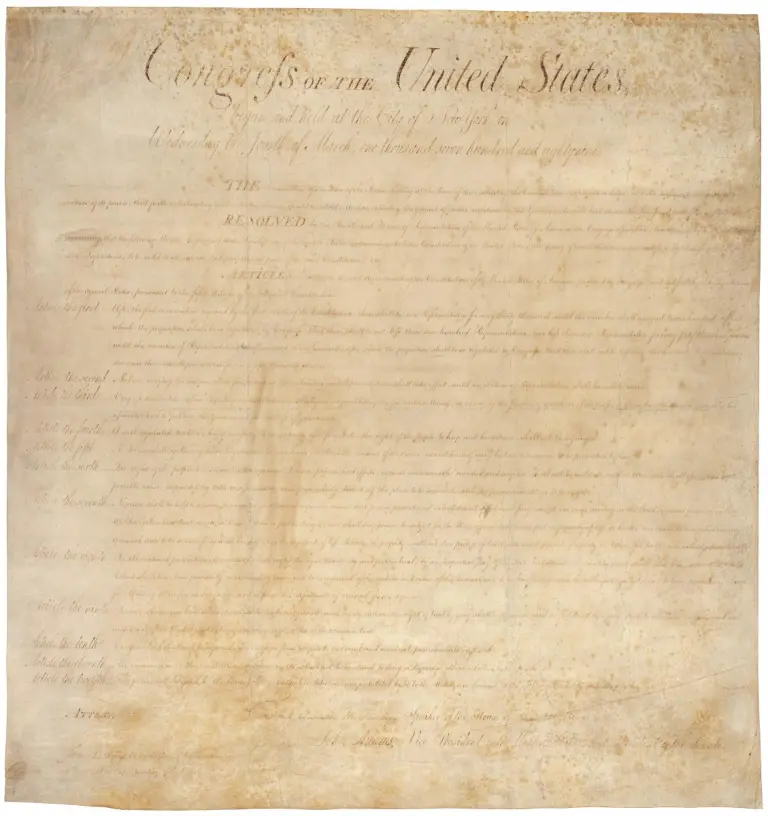
Congress shall make no law respecting an establishment of religion, or prohibiting the free exercise thereof; or abridging the freedom of speech, or of the press; or the right of the people peaceably to assemble, and to petition the Government for a redress of grievances.
A well regulated Militia, being necessary to the security of a free State, the right of the people to keep and bear Arms, shall not be infringed.
No Soldier shall, in time of peace be quartered in any house, without the consent of the Owner, nor in time of war, but in a manner to be prescribed by law.
The right of the people to be secure in their persons, houses, papers, and effects, against unreasonable searches and seizures, shall not be violated, and no Warrants shall issue, but upon probable cause, supported by Oath or affirmation, and particularly describing the place to be searched, and the persons or things to be seized.
No person shall be held to answer for a capital, or otherwise infamous crime, unless on a presentment or indictment of a Grand Jury, except in cases arising in the land or naval forces, or in the Militia, when in actual service in time of War or public danger; nor shall any person be subject for the same offence to be twice put in jeopardy of life or limb; nor shall be compelled in any criminal case to be a witness against himself, nor be deprived of life, liberty, or property, without due process of law; nor shall private property be taken for public use, without just compensation.
In all criminal prosecutions, the accused shall enjoy the right to a speedy and public trial, by an impartial jury of the State and district wherein the crime shall have been committed, which district shall have been previously ascertained by law, and to be informed of the nature and cause of the accusation; to be confronted with the witnesses against him; to have compulsory process for obtaining witnesses in his favor, and to have the Assistance of Counsel for his defence.
In Suits at common law, where the value in controversy shall exceed twenty dollars, the right of trial by jury shall be preserved, and no fact tried by a jury, shall be otherwise re-examined in any Court of the United States, than according to the rules of the common law.
Excessive bail shall not be required, nor excessive fines imposed, nor cruel and unusual punishments inflicted.
The enumeration in the Constitution, of certain rights, shall not be construed to deny or disparage others retained by the people.
The powers not delegated to the United States by the Constitution, nor prohibited by it to the States, are reserved to the States respectively, or to the people.
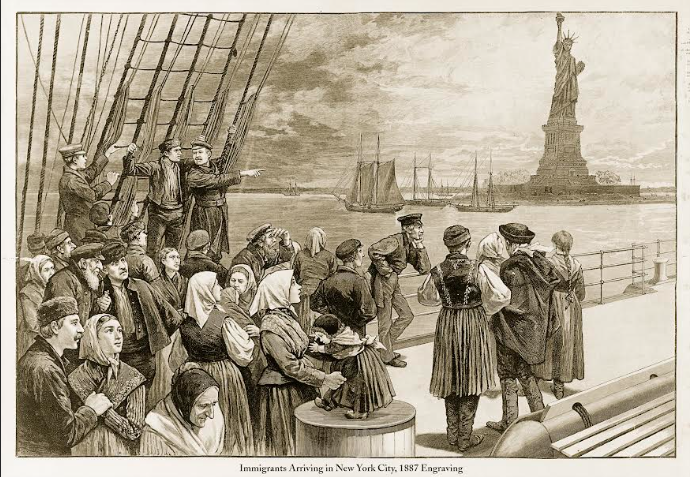
The Constitutional Solution for an Accountable America.
Mike Rees (Author)